AI Marketing, Lead Generation, & Growth Strategies

Voice Meets Chat: What the SoundHound + LivePerson Deal Means for AI Customer Service
The Customer Service AI Landscape Just Changed — Again
For the past several years, businesses piecing together an AI-powered customer service strategy have faced a stubborn problem: voice AI and digital chat AI lived in separate worlds. A customer calling your phone line got one experience. A customer reaching out via web chat or text messaging got a completely different one. Connecting those two worlds required multiple vendors, complicated integrations, and constant context loss every time a customer switched channels.
That problem got a lot closer to being solved this week.
On September 4, 2026, SoundHound AI officially completed its acquisition of LivePerson, one of the longest-running enterprise conversational AI companies in the industry. The result is a single, unified platform that brings together voice AI and digital messaging under one roof — and the implications extend well beyond Wall Street.

What Actually Happened
SoundHound AI, known for its proprietary voice recognition and agentic AI capabilities, announced the deal back in April 2026. The acquisition officially closed at the start of this month, with LivePerson's stock ceasing to trade on the Nasdaq as the company became part of SoundHound's growing AI portfolio.
LivePerson brought something significant to the table: a digital messaging platform that processes approximately one billion customer messages every month. That scale, combined with SoundHound's voice AI infrastructure that handles billions of voice interactions annually, creates what the combined company is calling the industry's most complete omnichannel conversational AI platform.
LivePerson's platform is being integrated into OASYS — SoundHound's self-learning Orchestrated Agent System — which is designed to let organizations build and deploy conversational AI agents that can handle transactions, tasks, and workflows on behalf of customers and employees across any channel.
The numbers behind the deal are notable. The combined company now counts 25 of the Fortune 100 among its customers, operates across 30+ countries, and holds a portfolio of over 750 patents. The leadership expects the combined revenue opportunity from the existing customer base alone to reach $500 million.
Why the Omnichannel Problem Matters to Every Business
You don't need to be a Fortune 100 company for this to be relevant to you. The underlying problem this acquisition addresses is one that businesses of every size face daily.
Customers don't think in channels. They start a question on your website's chat widget and then call your phone number to follow up — expecting your team to already know what they asked. They send a text message and then walk into your location. They leave a voicemail and send a follow-up email. The disconnected nature of most customer service tools means that every one of those transitions creates friction, frustration, and repeated conversations.
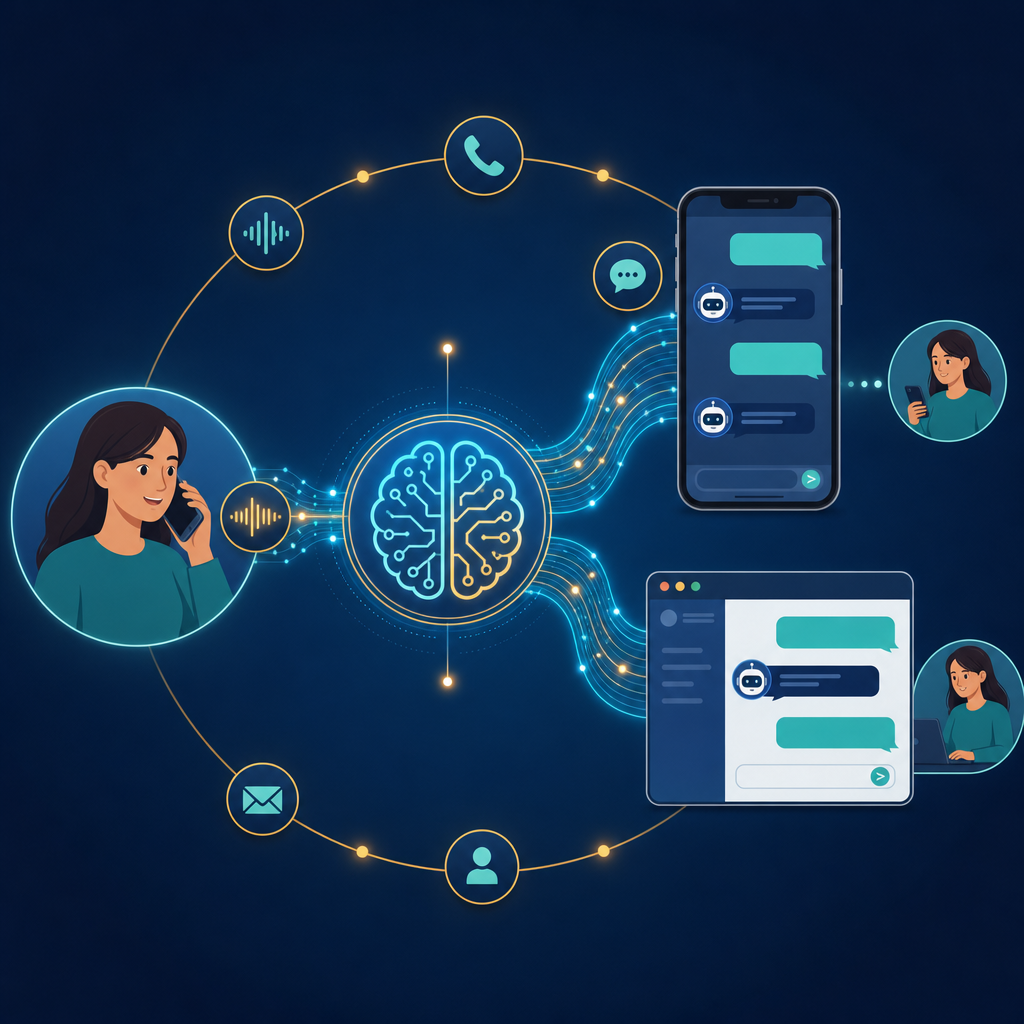
The CX industry has a term for this: context loss. It happens every time a customer has to re-explain their situation because the new channel they switched to has no record of the previous one. It's one of the most common complaints customers have about business interactions — and it's almost entirely a technology problem, not a people problem.
The SoundHound + LivePerson combination is specifically designed to eliminate that gap at the enterprise level. But the broader movement it represents — toward unified, AI-powered customer engagement across all channels — is one every business should be paying attention to right now.
What This Signals About Where AI Customer Service Is Heading
This deal isn't happening in isolation. It reflects a clear industry direction: the separation between voice AI tools and text-based chat AI tools is collapsing. Customers, and the businesses that serve them, increasingly expect a single intelligent layer that handles all of it — phone calls, web chat, SMS, social messaging, in-app messaging — with consistent context, consistent tone, and consistent capability.
A few things make this shift significant right now:
1. AI Agents Are Getting Good at Handoffs
Early AI chatbots and voice systems were notoriously bad at one thing: gracefully handing a conversation from one channel or agent to another without losing information. Modern agentic AI platforms are built with this in mind from the start. OASYS, SoundHound's orchestration system, is designed explicitly to carry intent, context, and workflow state as conversations move across channels. That's a fundamental architectural improvement over the generation of tools that came before it.
2. Data Advantage Compounds Over Time
One underappreciated aspect of this acquisition is the data asset it creates. SoundHound processes billions of voice interactions annually. LivePerson processes roughly one billion messages per month. Together, those datasets represent tens of billions of customer interactions — an enormous foundation for training AI that understands how real conversations actually flow across channels. For businesses using these platforms, that depth of training typically translates into better accuracy, fewer errors, and more natural interactions.
3. The Enterprise Benchmark Raises the Expectation for Everyone
When 25 of the Fortune 100 adopt a new standard for AI customer service, that standard tends to trickle down quickly. Customers who experience seamless, context-aware AI customer service interactions through their bank, airline, or telecom provider will increasingly expect the same from the local business, the regional service company, and the growing mid-market firm. Businesses that haven't started building toward unified AI customer engagement will feel that gap more acutely over the next 12 to 18 months.
What Smaller Businesses Can Take Away From This Right Now
You don't need a platform with 750 patents or Fortune 100 customers to act on the lessons of this deal. Here are three practical ways businesses of any size can move in the right direction today.
Audit Where Your Customer Conversations Break Down
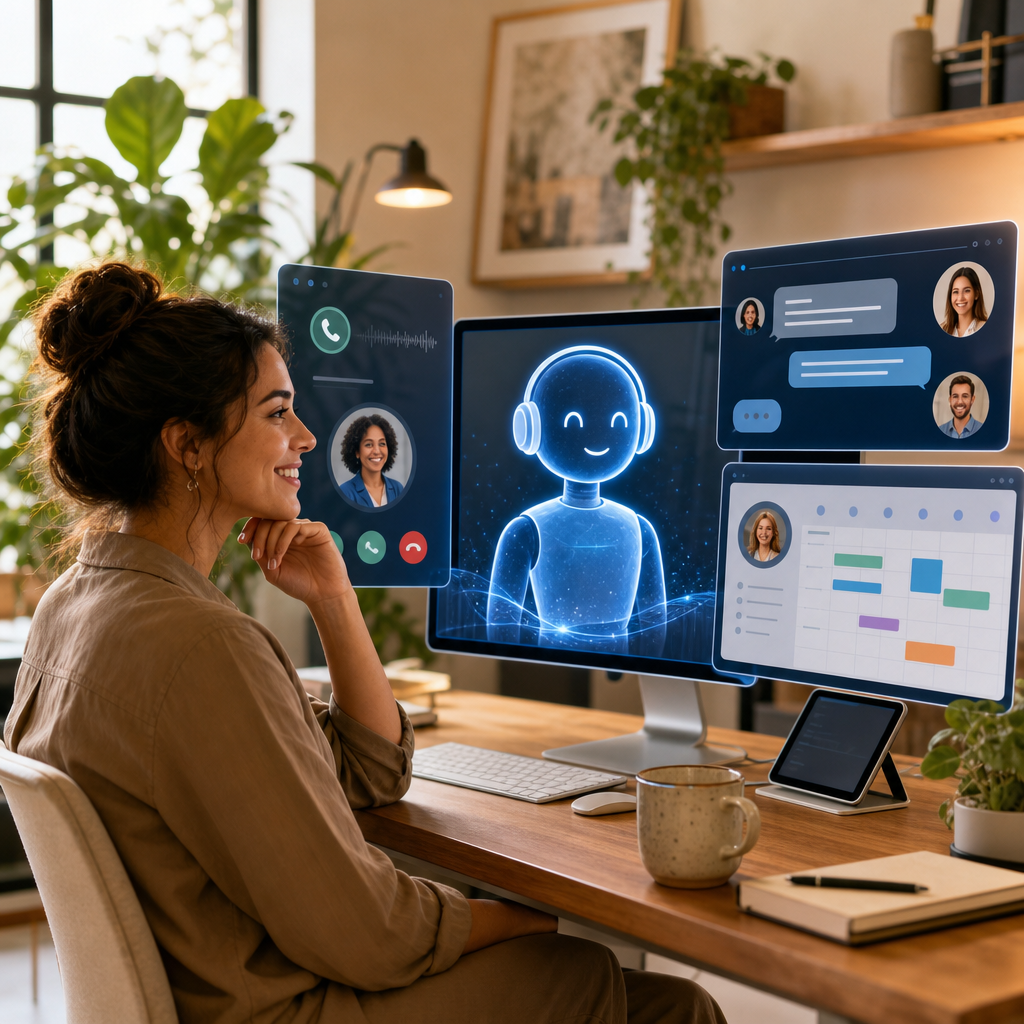
Start by mapping the actual journey your customers take when they reach out. Where do they switch channels? Where do they have to repeat themselves? Where does your team lose context? Those friction points are exactly where an AI-powered system — even a simple one — can have immediate impact. Identifying the gaps is the first step toward closing them.
Choose AI Tools That Are Built to Connect
When evaluating AI customer service tools, ask vendors directly: how does your platform share context when a conversation moves from one channel to another? How does your voice solution connect to your chat solution? Does your system log all interactions in one place? Tools that can't answer those questions clearly are selling you a piece of the puzzle, not a solution.
Start With One Channel, Then Expand
The best approach for most small and mid-sized businesses isn't to rebuild everything at once. Start by deploying an AI assistant on your most active customer communication channel — often web chat, SMS, or phone — and get it working well there first. Once that's running reliably, expand to the next channel and focus on connecting them. This incremental approach keeps complexity manageable while delivering real results at each step.
The Bigger Picture: AI Customer Service Is No Longer Optional
The SoundHound + LivePerson deal is the latest signal in a pattern that's been building for a while. The businesses investing in AI-powered customer engagement today are building a competitive advantage that compounds over time. Every interaction their AI handles becomes training data. Every workflow they refine gets faster. Every customer who has a smooth, responsive experience is more likely to return and refer others.
Conversely, businesses that continue to run disconnected tools, rely entirely on human-only response, or delay AI adoption because it seems complicated are falling further behind — not because the technology is moving away from them, but because customer expectations are moving ahead of them.
The era of voice AI and chat AI as separate departments is ending. The question for every business is whether they're building toward the unified version now, or planning to catch up later.
How ResProAI Can Help
At ResProAI, we help businesses build exactly this kind of connected AI customer engagement infrastructure — without requiring enterprise budgets or an IT department. From AI voice agents that handle inbound calls and qualify leads, to conversation AI that engages website visitors and follows up with prospects automatically, to CRM automation that logs every interaction in one place, our systems are built to work together.
If you're looking at your current customer communication setup and wondering where AI fits — or where it's already missing — that's the right question to start with. We can help you figure out the answer.
Ready to see what a smarter customer engagement system could look like for your business? Explore ResProAI's AI solutions and book a free consultation today.
Sources: SoundHound AI Official Announcement (September 4, 2026) · GlobeNewswire (September 4, 2026) · BigGo Finance (September 4–5, 2026) · CX Today (April 27, 2026) · Fintech Global (April 23, 2026)
Primary keyword: AI customer service platform · Secondary keywords: voice AI, omnichannel AI, conversational AI, SoundHound LivePerson, AI voice agent, enterprise AI customer service, AI contact center · Long-tail keywords: how AI handles customer service across voice and chat, best AI platform for customer service 2026, omnichannel AI customer service for small business, AI voice agent for business, how to automate customer conversations with AI · Semantic topics: contact center automation, AI customer engagement, voice and chat AI integration, customer experience AI, agentic AI for customer service
Company
Get In Touch
Legal
Follow us


